Micah 7 Understanding: Misery Turned to Hope

Micah 7 reminds us that misery is never the final word. As we wait on the Lord, He hears us, lifts us, restores us, and brings light into our darkest places. This reflection explores Micah 7 understanding through grief, hope, and God’s unfailing love.

Micah 7 understanding becomes clearer when we read the chapter slowly and let its honesty sink into the heart. This is a passage that doesn’t hide the brokenness of life — it acknowledges misery, sin, weakness, loss, darkness, and helplessness — yet it ends with a fierce, unshakable hope.

The heading in the NLT reads:
“Misery Turned to Hope.”
And what a fitting description that is for what many of us walk through.

Before diving deeper, here’s the reminder that stopped me in my tracks this morning. In The Wayfinding Bible, the exploration point reads: 

“God will not spare us from situations that refine us, but He will be with us as we endure them. And He will restore us to wholeness again.”

What a comforting truth to start the week with.

1. Waiting on the Lord

The theme God keeps placing in front of me is simple and uncomfortable:
Wait on the Lord.
Not rush.
Not fix.
Not carry everything alone.
Just wait.

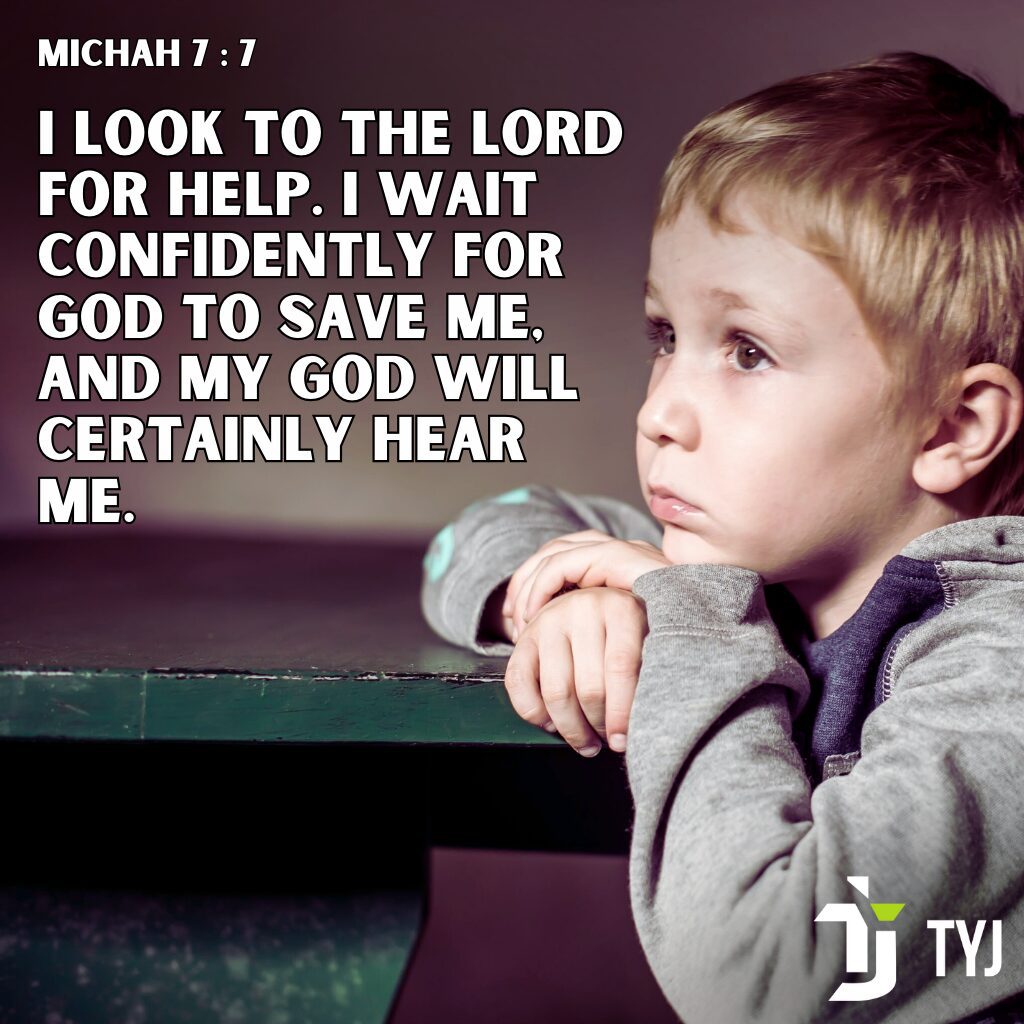
Micah 7 puts it beautifully:

Young child looking up with hope beside the Micah 7:7 scripture “I look to the Lord for help; I wait confidently for God to save me,” illustrating Micah 7 understanding about waiting on the Lord.

This chapter is filled with reminders that breathe hope into the heaviness of life:

  • Though I fall, I will rise again.

  • Though I sit in darkness, the Lord will be my light.

  • He will take up my case and bring justice.

  • He delights in showing unfailing love.

  • He will trample our sins under His feet.

  • He will throw them into the depths of the ocean.

This is the heart of Micah 7 understanding — misery is not the final chapter.

2.What Micah 7 Teaches Us

When we study Micah 7 understanding, we realise it is a chapter written for people who know suffering, regret, and loss.

It teaches us:

  • God sees our sin — but He also sees our repentance.

  • God corrects — but He does not abandon.

  • God disciplines — but He restores.

  • God judges — but He delights in mercy.

Micah 7 is for imperfect people (which is all of us), walking imperfect paths, held together by a perfect God.

3. When Misery Feels Personal

It has almost been a year since my dad left this world. The calendar says time has passed, but grief doesn’t care about the calendar. Grief creates its own timeline — the “before” and the “after.”

Misery… it takes different shapes.
Yes, there is the deep loss — the life-changing kind.
But there are also the small, daily losses that pile up:

  • the parking spot you missed

  • the job opportunity that didn’t work out

  • the friendship that drifted

  • the dream that slipped through your fingers

Loss is loss, and humans feel it deeply.

4. A Year of Forced Change

This past year has felt long, heavy, and unbearably real.
A year of watching my family face storms I never imagined we’d walk through.
A year of feeling stuck inside emotional fog.
A year of hiding — showing up only because adult life requires it, but feeling disconnected inside.

Maybe a part of me still feels missing or bruised.
Maybe you’ve felt that too.

And in those moments, the heart starts whispering lies:
“If I work hard enough, maybe I’ll deserve peace.”
“If I fix everything, maybe the pain will stop.”

But that isn’t how God works.

5. The Grace You Only Learn in the Dark

There comes a moment when you whisper, “Lord, I’m breaking again… and I don’t want to break anymore.”
And quietly, gently, He answers:
“It was never about what you could do — it’s always been about who I AM.”

This is the message at the center of Micah 7 understanding:

When you can’t fix anything, when you can’t carry the weight, when you can’t change a thing —
that’s where you learn what grace really is.

Young child looking upward with a soft expression beside the words “Grace is not earned. Grace is not deserved. Grace is given — freely, faithfully, endlessly,” highlighting Micah 7 understanding of God’s mercy and compassion.

And that is where misery begins to turn into hope.

6. When Misery Turns to Hope

Micah 7 closes with one of the most powerful declarations in Scripture:

“You will show faithfulness and unfailing love.”

God does not stay angry forever.
He does not withhold compassion.
He does not abandon His people.

He takes our misery, our sin, our heaviness, our sorrow —
and He brings us into His light.

This week, I am making one choice:
To open my hands and let God carry what I keep trying to hold.

Because:

  • He is my strength.

  • He is my light.

  • He is my justice.

  • He is my restoration.

Young child looking upward with soft expression beside the text “Thank You Jesus!”, representing gratitude and the hope expressed in Micah 7 understanding.

FINAL THOUGHTS & PRAYER

Lord, thank You for the message of Micah 7 — that misery is never the end for Your children. Thank You for hearing us, lifting us, restoring us, and bringing us into Your light. Teach us to wait, to trust, and to rest in Your unfailing love. Strengthen every heart reading this, and turn their sorrow into hope.
Amen.

Leave a Reply